You control the pace
Nobody makes you retell your story before you're ready. Pushing too fast can do harm.
Care that assumes trauma may be part of your story and never pushes you faster than you can go. It shapes everything at our addiction treatment center in Los Angeles.
 Joint Commission
 Medically reviewed by Dr. Eric Chaghouri, MD, our medical director. August 2026

You set the pacenobody rushes your story
Trauma-informed therapy is a way of running all care, from your first phone call to your last group. It starts from one idea: trauma may be part of your story, even if you've never called it that. Every part of treatment here is set up so it never makes things worse.
No. EMDR is one specific technique for working through hard memories. Trauma-informed care is the frame around your whole treatment, whatever method gets used inside it. Here we deliver CBT and DBT inside that frame, paced to your history.
No. You decide what to share and when. Many people start treatment without talking about their trauma at all. The early weeks focus on feeling steady. Deeper work starts only when you choose it and have the tools to do it safely.
Grounding and emotion regulation skills come first, so you have something to lean on when feelings spike.
Learn the routine and what to expect each day, so nothing catches you off guard.
Tools for staying steady when a memory or a trigger hits.
Get to know your therapist before you go anywhere hard.
Processing starts when you say so, with your therapist right there with you.
Joint CommissionIt shows up in small things. Your clinicians explain the reason behind each part of your care, and your plan is built with your input. Trauma often takes power away from people, so here you get a say in your own treatment.
Nobody makes you retell your story before you're ready. Pushing too fast can do harm.
You always know what's happening in your care and why. Nothing is decided behind closed doors.
You're the expert on your own life. Your clinicians work as your partners.
A calm, predictable enviroment so your nervous system can finally stand down.
For many people, substances started as the most reliable relief they could find for pain nobody helped them carry. Alcohol can quiet a body that's always on alert, and opioids do something similar for pain that feels unbearable. When treatment takes the substance away and ignores the pain under it, relapse often follows. We work on both at once.
Everyone here gets trauma-informed care, since it runs through every program at our Westwood center. It helps most if you've lived through trauma or if past treatment felt like too much. A free assessment, by phone or in person, is the easiest place to start.
Joint CommissionNechama Berkowitz, APCC, is our trauma-informed therapist. The deeper one-on-one work happens in individual therapy, at your pace. Dr. Eric Chaghouri, our medical director and psychiatrist, makes medication choices with your full history in mind. Every facilitator works from the same approach, in groups and in private sessions.
 Nechama Berkowitz, APCCTrauma-informed therapist
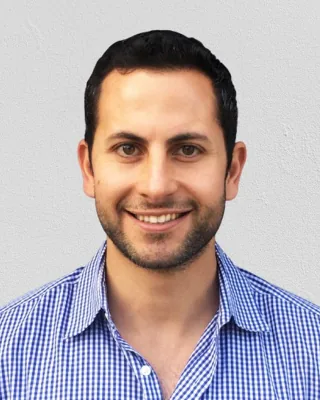 Dr. Eric Chaghouri, MDMedical director, psychiatrist
 Ari Labowitz, LMFTClinical director
 Viola Sulahian, AMFTPrimary therapist
All the facilitators have a lot of experience in recovery and walk the talk.
Accredited by The Joint Commission since August 2026
Certified by the State of California, DHCS #191643AP
Meet the whole team
Joint CommissionTrauma-informed care is how we run our outpatient programs, so your plan looks at PHP or IOP. Many PPO plans may cover that care. We work with most major PPO plans and check your benefits for free, usually within the hour.
Under California's SB 855, health plans must cover medically necessary care for mental health conditions like PTSD, and for addiction.
What we find out for you
Joint CommissionVerify your insurance in about a minute, or call our Los Angeles admissions team and we'll walk you through every step. Free and confidential.