CBT
Cognitive behavioral therapy. You work on the triggers and thought patterns behind your use, and make a plan for cravings and high-risk moments.
Medication and therapy for opioid addiction at our Westwood center, and you sleep at home every night. Our addiction treatment center in Los Angeles treats everything from pain pills to fentanyl.
 Joint Commission
 Medically reviewed by Dr. Eric Chaghouri, MD, our medical director. March 2026
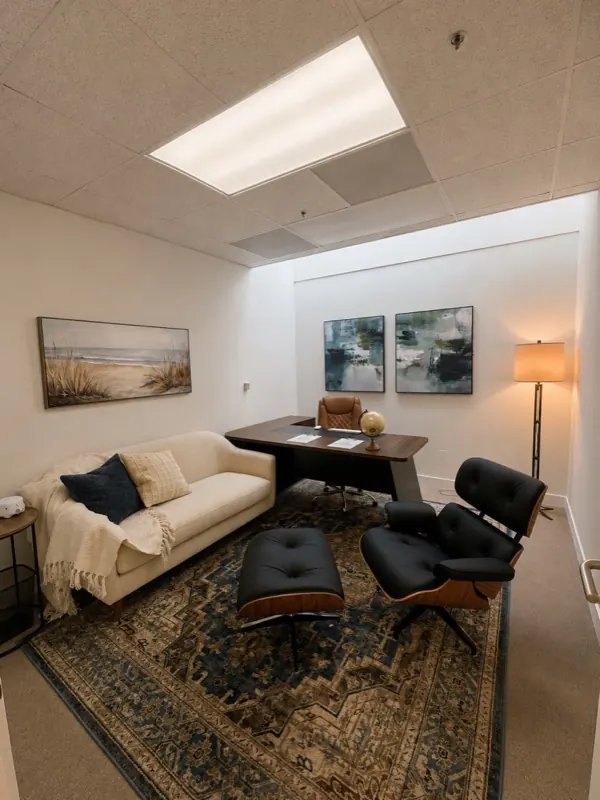
Suboxone + therapymanaged by our medical team
Opioid addiction changes the brain's reward system, whether it started with a pain prescription or with heroin from the street. Stopping without help gets very hard. We treat it with medication like buprenorphine (Suboxone) plus therapy, in a full-day program (PHP) or in 3-hour sessions a few days a week (IOP).
All of it happens at our center on Westwood Blvd, a few minutes from the 405 and the 10.
Cognitive behavioral therapy. You work on the triggers and thought patterns behind your use, and make a plan for cravings and high-risk moments.
Peer support and accountability from people who know what opioid recovery takes.
Small rewards for clean tests and for showing up. It's one of the most effective behavorial tools for opioid addiction.
Opioid addiction often comes with trauma or PTSD. We treat both together, as part of the same plan.
Usually not. Buprenorphine (Suboxone) relieves withdrawal itself, so many people start it early in outpatient care. If you've been using fentanyl, the start takes more care, because fentanyl stays in the body longer. Your free assessment tells us what's safe for you.
If detox is the safer first step for you, we set it up with a trusted detox provider and hold your spot.
By phone or in person. We go over what you've been using and for how long.
Our medical team picks a safe way to begin buprenorphine, with extra care if fentanyl is involved.
Buprenorphine eases withdrawal and cravings, so your head is clear enough for therapy.
You start PHP or IOP here in Westwood and go home at night.
Joint CommissionOur medical team helps you choose. Buprenorphine (Suboxone) can start early and eases withdrawal while you settle into treatment. Naltrexone (Vivitrol) is a non-opioid option for people who have already finished detox and want nothing opioid in their system.
No. Buprenorphine is medicine for a medical condition. At a steady prescribed dose it doesn't make you high. It quiets withdrawal and cravings so therapy has room to work. SAMHSA and the American Society of Addiction Medicine both support its use.
Joint CommissionIt depends on your plan. We work with most major PPO plans, and many plans may cover medication and therapy for opioid addiction. We check your benefits for free, usually within the hour, so you can decide with the facts in hand.
Under federal parity law and California's SB 855, health plans have to cover medically necessary addiction care.
What we find out for you
Joint CommissionNot from us. HIPAA and 42 CFR Part 2, a federal privacy law written for addiction treatment, protect your records, and we never contact your employer. Most of our clients keep working. IOP has morning and evening tracks, and many sessions can happen by telehealth.
If you do need time off, federal FMLA and California's CFRA usually protect your job, and the leave request doesn't have to say why.
Joint CommissionCall us for a free assessment. Most people start within days of their first call, so the support doesn't stop when detox ends. If you've finished withdrawal and want a non-opioid medication, naltrexone (Vivitrol) is one way to protect the progress you made.
Honestly, after detox, I had no idea what came next.
Verify your insurance in about a minute, or call our Los Angeles admissions team and we'll walk you through every step. Free and confidential.