Your consent first
We need your written consent before we share anything, apart from rare cases the law requires.
One team treats your mental health and your substance use together, with one plan for both. It's built into every program at our addiction treatment center in Los Angeles in Westwood.
 Joint Commission
 Medically reviewed by Dr. Eric Chaghouri, MD, our medical director. March 2026

One teamfor both conditions
Dual diagnosis means you have a mental health condition and a substance use problem at the same time. Doctors also call it co-occurring disorders. Depression with heavy drinking is one common example. The two feed each other, so we treat them together, with one team and one plan.
Source: National Institute of Mental Health.
Many different pairs. Two of the most common are depression with alcohol use and PTSD with opioid use. If you've struggled with both mental health and substances, and neither one fully explains how you feel, treating both together may be the piece that's been missing.
Joint CommissionThe untreated one tends to pull the other back. Many people start using to cope with anxiety or low moods, and over time the using makes those symptoms worse. Treating only one side raises the risk of relapse, so our team works on both at the same time.
Dr. Eric Chaghouri, our medical director, is a board-certified psychiatrist who trained at USC. He manages medication for both conditions. Your therapist works from the same plan, using CBT, short for cognitive behavioral therapy, adapted for people who live with both.
Nechama Berkowitz, APCC, is our trauma-informed therapist, for people whose substance use is tied to trauma or PTSD.
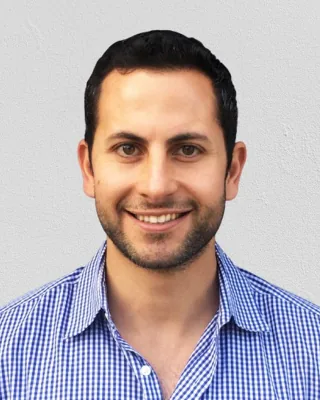 Dr. Eric Chaghouri, MDMedical director, psychiatrist
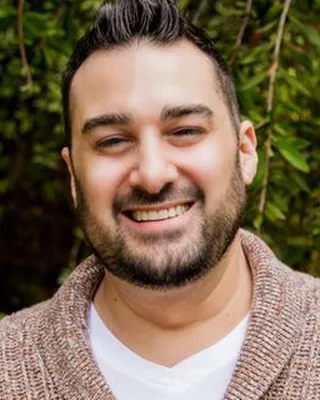 Ari Labowitz, LMFTClinical director
 Viola Sulahian, AMFTPrimary therapist
 Nechama Berkowitz, APCCTrauma-informed therapist
Working with Viola was amazing. She helped me open up, look at things honestly, and do real work on myself.
Accredited by The Joint Commission since August 2026
Certified by the State of California, DHCS #191643AP
Meet the whole team
Joint CommissionYou sit with peers who live with both a mental health condition and addiction. Hearing someone describe what you've felt eases the shame and the isolation. The group keeps you accountable between sessions, and it becomes a community you can lean on.
Our psychiatrist goes over it during your first evaluation. From there, your mental health medication and any medication for your recovery are managed as one plan, with a close eye on how they interact. It helps to bring a list of everything you take.
We look at your mental health and your substance use, and at how each one feeds the other.
Your psychiatrist and your therapist build a single plan, so nothing falls into the gap between two systems.
Medications for both conditions get checked against each other as you go.
As your brain chemistry settles in recovery, your treatment shifts with it.
Not from us. We never contact employers, and HIPAA protects your records. Substance use records get extra federal protection under 42 CFR Part 2. If you want your family involved, family therapy can help them understand both conditions and how to support you.
We need your written consent before we share anything, apart from rare cases the law requires.
IOP has an evening track, so you can get help and keep working.
Join sessions by video from anywhere in California on days you can't make it to Westwood.
Family sessions help the people close to you learn what you're dealing with. They're availible in Spanish too.
Joint CommissionPlans may cover it. Federal parity law and California's SB 855 require health plans to cover medically necessary mental health and addiction treatment. We work with most major PPO plans and check your benefits for free before you commit to anything.
What we find out for you
Joint CommissionVerify your insurance in about a minute, or call our Los Angeles admissions team and we'll walk you through every step. Free and confidential.